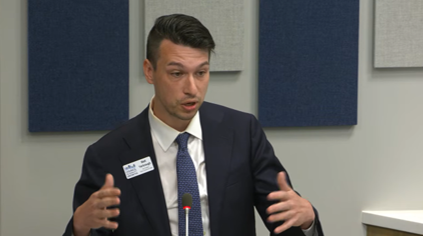
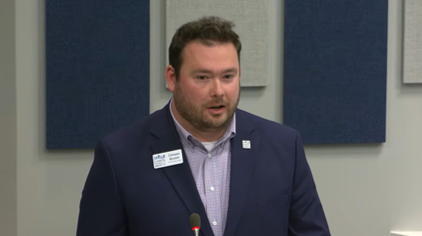
Cobb County Commissioners adopted the county’s 2026 code amendment package on October 27 following extensive review and engagement by the Council for Quality Growth. CQG worked with Commissioners on the development implications of the proposals through written recommendations, follow-up discussions and public testimony from Vice President of Policy and Government Affairs Matt Yarbrough and Senior Policy Analyst Carson Brown. The Council’s October 15 letter addressed four principal areas: eligibility and implementation of housing incentives; the feasibility of accessory dwelling units; proportional, workable data-center regulations; and proposed separation requirements for convenience stores with fuel sales. Across those recommendations, CQG supported the county’s housing and community-protection objectives while identifying provisions that could discourage smaller developments, constrain reinvestment or introduce unnecessary permitting uncertainty. The adopted package incorporates several changes consistent with that advocacy, although other requested revisions remain unresolved.
The most direct alignment with CQG’s housing recommendations was removal of the proposed $10 million investment and 50-unit minimums from the new housing incentive program. CQG had requested a scaled eligibility pathway for smaller developments, including infill projects; eliminating the thresholds opens eligibility beyond larger projects. Qualifying developments must still reserve at least 20 percent of units for households earning no more than 80 percent of area median income, with potential building-permit fee relief and expedited permitting and plan review. However, the final language retains ownership-focused affordability restrictions and restarts the control period upon an affordable unit’s sale, leaving CQG’s requests for explicit rental eligibility and more predictable resale obligations unaddressed.
Commissioners also unanimously tabled the fuel-use amendment, removing it from the adopted package. CQG had challenged the proposed 600-foot separation from residentially zoned properties and other protected uses and the 1,000-foot spacing between fuel uses, arguing for site-specific compatibility standards and protection of existing businesses. Tabling prevents those restrictions from taking effect through this package while leaving the issue available for future consideration.
CQG’s technical feedback also sought alternatives to a closed-loop-only cooling requirement for data centers. The final ordinance allows other non-evaporative technologies of equal or greater efficiency, while generally prohibiting cooling-water discharge into the county wastewater system—an accommodation consistent with the Council’s request for flexibility without sacrificing resource protections.
Other requests were not incorporated: the adopted data-center definition applies to facilities exceeding 30,000 square feet and/or consuming more than three megawatts, rather than the Council’s recommended distinction at 10 megawatts. Commissioners also removed the proposed light-industrial special-use pathway and excluded data centers from the county’s business incentive program. For ADUs, CQG advocated administrative approval, more workable setbacks and practical rental flexibility; the adopted rules retain special land use permits for units with separate entries, owner occupancy and a prohibition on short-term rentals of both the ADU and primary dwelling. These outcomes underscore the importance of CQG’s detailed review and sustained dialogue as the county moves into implementation.
The Council for Quality Growth thanks Chairwoman Lisa Cupid and the Cobb County Board of Commissioners for diligently working with CQG, considering the development community’s recommendations and engaging constructively throughout this amendment process.